You might have noticed PFAS coming up in the news again, often paired with phrases like “forever chemicals” and “water quality concerns.” It’s a serious topic, but it doesn’t need to be confusing or alarming.
Here’s a clear, calm look at what PFAS are, where they’ve been found recently in Australia, why they’re monitored, and how this relates to where our water comes from.
PFAS stands for per- and polyfluoroalkyl substances, they're a group of man-made chemicals once widely used in products like firefighting foams, non-stick cookware (think Teflon), and water-resistant materials (think Lululemon).
They’re often called forever chemicals because they’re extremely resistant to breaking down. Heat, sunlight, and natural biological processes don’t easily degrade them, which means once PFAS enter soil or groundwater, they can persist for decades.
This persistence is why regulators around the world take PFAS seriously. It’s not about short-term exposure, but what happens over time.
Another reason PFAS is closely monitored is how it behaves once exposure occurs.
Certain PFAS compounds can accumulate over time, both in the environment and in the human body, rather than being quickly eliminated. That doesn’t mean a single exposure is harmful, but it does explain why scientists focus on long-term, cumulative intake, particularly from everyday sources like drinking water.
Recent testing has identified PFAS in specific locations in New South Wales, including parts of the Blue Mountains region.
One area referenced publicly is Medlow Bath, where investigations have focused on groundwater and surface water connected to certain dams and creeks. As a precaution, some sources have been taken offline while further testing continues.
It’s important to add context here:
PFAS findings are location-specific
They relate to particular catchments and historical activities
They do not indicate widespread contamination across all water sources
Where PFAS appears depends heavily on land use history, groundwater movement, and local geology.
Unfortunately, yes. PFAS has been part of the environmental conversation in Australia for more than a decade.
These chemicals were used widely in the past, particularly in firefighting foams and industrial settings. While many uses have been phased out, PFAS persists long after its use stops. Improved testing has helped regulators better understand where it remains, which is why it’s receiving renewed attention now.
This isn’t about a sudden change in water quality - it’s about better visibility of a long-standing issue.
Health is naturally where most questions land.
Research shows PFAS can remain in the body once exposure occurs, and studies have found associations with things like cholesterol levels, immune response, hormone regulation and more.
Not all water sources are the same.
PFAS risk depends on factors such as:
Proximity to known contamination sites
Whether groundwater systems are connected
The depth and natural protection of the water source
Shallow or surface-connected systems are more vulnerable than deep, geologically protected aquifers. Understanding where water comes from matters just as much as how it’s treated.
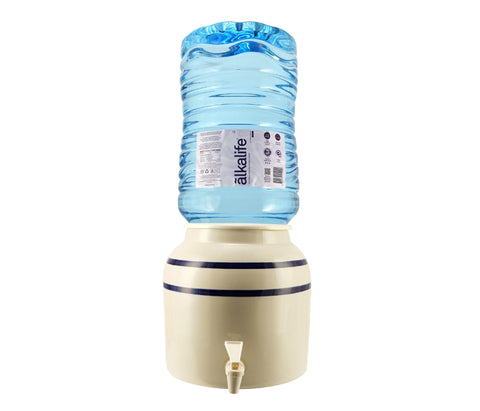
ãlkalife's water is sourced miles away from areas currently referenced in PFAS investigations, with no known hydrological links to those sites.
Our source sits within the Jenolan Caves, a deep limestone karst system. Water here is naturally filtered through rock and stored underground, well away from surface-level contamination pathways.
That geological separation is key. PFAS doesn’t travel unless water systems are physically connected and in this case, they aren’t.
Because PFAS is part of the broader water quality conversation, we believe transparency matters.
We’ve independently tested our water for PFAS, with results showing no detectable PFAS.
This isn’t about reacting to headlines, it’s about providing clarity.
PFAS is a real environmental issue while at the same time, context matters.
PFAS findings are localised, not universal. Water quality depends on source location, geology, and testing, not just headlines. Understanding those differences helps people make informed choices without unnecessary fear and worry.
For us, it comes back to something simple: know your source, trust transparent data, and keep the conversation grounded in facts.
PFAS stands for per- and polyfluoroalkyl substances. It’s a large group of synthetic chemicals that were historically used in products like firefighting foams and water-resistant materials.
PFAS are called forever chemicals because they don’t break down easily in the environment. They can remain in soil and groundwater for many years, which is why they’re closely monitored.
No. PFAS detections are location-specific. They’ve been found in certain catchments and groundwater systems, often linked to historical land use. Many water sources are not affected.
Because some PFAS compounds can accumulate over time, regulators focus on minimising long-term exposure where practical. Monitoring helps authorities understand where PFAS is present and manage it responsibly.
We’ve independently tested our water for PFAS, and the results show no detectable PFAS.
PFAS doesn’t spread unless water systems are connected. Deep, geologically protected sources are less vulnerable than shallow or surface-connected systems. Understanding where water comes from is key.